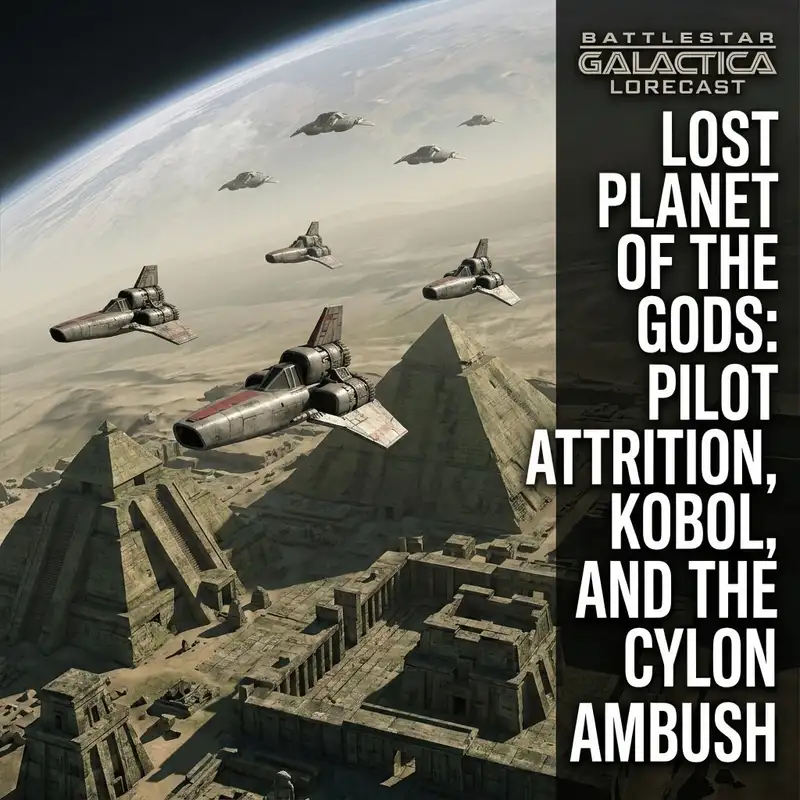
Lost Planet of the Gods: Pilot Attrition, Kobol, and the Cylon Ambush
Lost Planet of the Gods matters strategically because it sits inside the original-series continuity and its labeled television and expanded-story branches, a struggle in which survival depends on more than raw firepower. That makes machine intelligence, embodiment, replication,…
Lost Planet of the Gods matters strategically because it sits inside the original-series continuity and its labeled television and expanded-story branches, a struggle in which survival depends on more than raw firepower. That makes machine intelligence, embodiment, replication, autonomy, and the changing military relationship between creator, weapon, and independent actor central to understanding how the situation develops and why apparently reasonable decisions can produce dangerous second-order effects. The topic is kept within the continuity identified by the supplied season structure, with uncertain details treated cautiously rather than filled in as fact. The wider season is concerned with fleet survival, Cylon warfare, resistance, command culture, and the changing meaning of the search for Earth; this topic shows what that looks like when decisions must be made under real strategic pressure. The result is a study of consequences: what the choice enables immediately, what it costs later, and how it changes the next available decision. Visit ImaginedBattlefield.com for more military and science fiction.